EPR Explained: What Packaging Manufacturers Need to Know in 2026
Your buyers are under new pressure, here’s how to turn it into your advantage.
If you manufacture sustainable packaging and sell into the U.S. market, you’ve probably heard the term “EPR” thrown around more often this year. Could be in a buyer email. Maybe in a trade publication. Or even in from a client who suddenly started asking questions about recycled content percentages you’d never been asked about before.
Here’s what’s actually happening, and why it matters for your business, even if the law doesn’t apply to you directly:
Extended Producer Responsibility (EPR) is a policy framework that shifts the cost of packaging waste away from cities and taxpayers and onto the companies that put packaging into the market. Instead of local governments paying to collect and recycle packaging, the brands selling the product fund that system directly.
As of 2026, the U.S. EPR landscape for packaging is concentrated in a set of leading states, each with its own program requirements. Roughly 34 states plus the District of Columbia now have some form of EPR law on the books across various product categories, including packaging.
Seven states currently have active packaging EPR laws: California, Colorado, Maryland, Maine, Minnesota, Oregon, and Washington. Several more states, including Wisconsin and New Hampshire introduced EPR bills in late 2025 and early 2026.
What EPR Means for Your Manufacturing Decisions

Material transparency
Buyers increasingly need SKU-level data: material composition, weight, and recycled content percentage. If you can hand that to a client without them having to ask twice, you remove friction from the sale.

Mono-material design
Multilayer and mixed-material packaging is being penalized under eco-modulated fee structures almost everywhere. Simpler material structures are becoming a financial advantage, not just an environmental one.
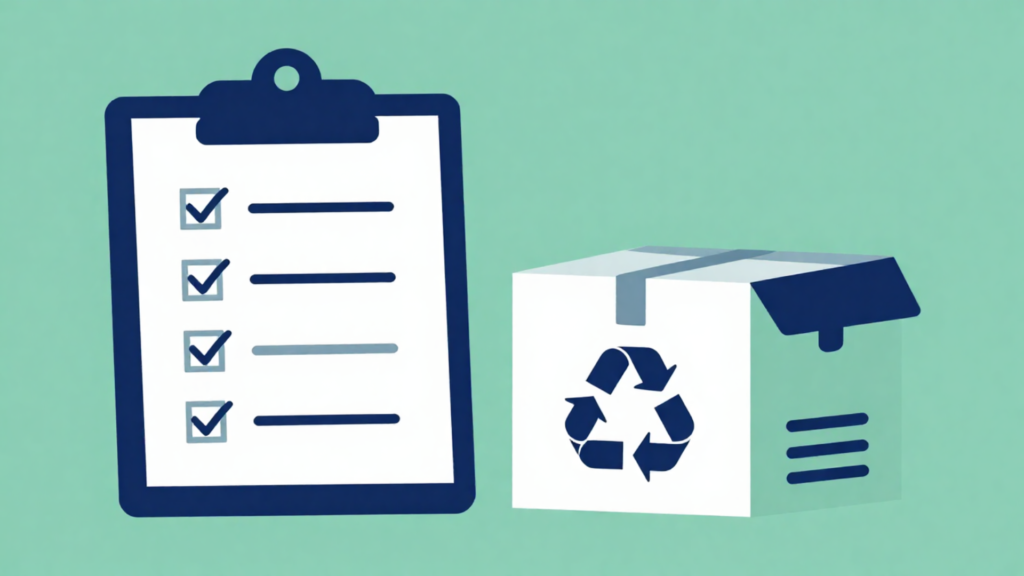
Verified recycled content
Claims aren’t enough anymore. Buyers need documentation they can use in their own compliance reporting.

Designing for the recycling systems
A material being theoretically recyclable doesn’t help your buyer if local infrastructure can’t process it. Buyers are starting to ask about end-of-life pathways, not just certifications.
The Opportunity Hiding in the Compliance Headache
Most manufacturers see regulation as a cost center. The smart ones see it as a sales conversation they can win before their competitors even understand the question.
Your buyers don’t need a lecture on EPR. Your buyers need a supplier who already has the answers: material data ready, recyclability documented, mono-material options on the shelf. That’s not a compliance burden. It’s a closing argument.
The manufacturers who get ahead of this in 2026 won’t be reacting to buyer questions next year.
They’ll be the reason their buyers don’t have to ask.
Prositework: Helping sustainable packaging manufacturers
Get found by the buyers who are already asking these questions through targeted Google Ads campaigns built for your niche.